Give Me a Weekend With Your Team and I'll Show You How to Connect Every Phase of the Fight Into One System.
Most MMA Clubs Train Individual Segments. Few Have a System for Transitions.
HERE IS THE GAP MOST CLUBS DON'T SEE
You run an MMA club. Your people train striking, wrestling, grappling — and they're getting good at it.
But somewhere between these segments, something gets lost. Not because the training is wrong. Because the connections between those segments rarely get the same dedicated attention. They get touched on. They don't get systematically trained.
And that gap shows up exactly where it hurts most — in sparring, in competition, and in every moment when the fight changes range.
Here is what that looks like in practice.
Your striker cannot relax and get going because he is afraid of getting taken down. When he does strike, he gets quickly thrown on his back — nullifying his best weapon.
Even though your wrestler or judo guy has great takedowns, he has trouble getting through the punches of an experienced striker. And even when he gets the takedown, he cannot hold top position because the ground control system is not connected to what came before it.
Your grappler has great submissions — when there are no punches involved. Once they start raining down, he feels lost and cannot attack anymore. He has trouble getting up from the bottom or sweeping the top guy.
The skills are there. The connection between them isn't.
Every serious MMA program faces this — because most training systems are built by range. Striking sessions, wrestling sessions, grappling sessions. Each coach is good at what they do. But not many people know how to combine the elements well. And the moments in between are exactly where fights are decided.
Georges St-Pierre said it best:
“I am not the best grappler. I'm not the best wrestler, or the best striker. But when you put all those together, I am the best.”
— Georges St-Pierre
That is the difference between athletes who look good in single segment drills and athletes who perform when the range changes.
The MMA Transition & Control Intensive is a structured two-day guest coach workshop designed to address exactly this gap.
SO MUCH MORE THAN I EXPECTED
Mark is an exceptional coach. Super sharp and technical in all aspects of MMA. I found his views and experience really important to my training. I planned on staying for a week but extended my stay for a month.
He is super sharp not just on technical training, but also on injury prevention, safety in training, nutrition and mental side of training.
I'd recommend Mark to anyone. No matter what age or experience you have. Mark really revived my enthusiasm for MMA again, so I'm going to continue training.
My experience here was exceptional and I cannot recommend Mark or his school highly enough.
PETER SAVVAS - Sidney, Australia
ABSOLUTELY GAME-CHANGING
He found errors other coaches I had didn't pick up on, and improved my strengths.
ERIC METZGER - South Lebanon, Ohio
The goal is not to throw more techniques at your team. It is to build a system that connects the ones your practitioners and athletes are already developing — and add the pieces that make that system complete.
WHAT THE WORKSHOP COVERS
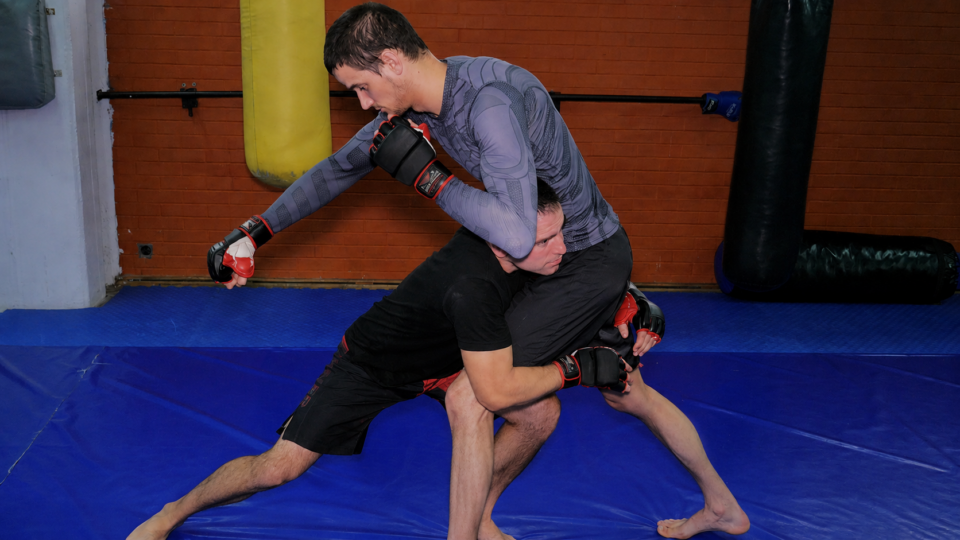
The first day runs two 90-minute sessions covering four connected areas.
MMA Striking — Feints and the Art of Not Getting Hit Back
Most striking training develops power and combinations. This session develops striking that functions inside MMA — where every punch carries a threat beyond just the punch itself.
Feints and level changes that produce real reactions, not just pad contact. The mechanics of punching while slipping — so your practitioners learn to land without walking into counters. Strikes that create openings for the next phase, whether that is a clinch entry, a level change, or a shot.
Striking to Wrestling
The entry is where most MMA attacks break down. A good shot from a bad position goes nowhere. This section covers how to use timing, reactions, proper distance for a shoot and striking setups to enter the clinch or shooting range with intent — reactively off a slip, and proactively off a striking combination.
Both routes. Because a one-dimensional entry is easy to defend.
Puppet Master Clinch
The clinch is not a neutral position. It is an opportunity — if you know how to use it.
When you control posture, balance and head position, everything opens up. Strikes create takedown opportunities. Takedown threats open strikes. The system combines Thai clinch, dirty boxing and clinch throws into one seamless framework — creating a level of confusion your opponent cannot systematically solve, because he cannot know what is coming next.
Puncher's Side Control
Getting to the top position is only half the job. This section covers what to do when you get to the best position for ground and pound — side control. Most people default to mount, but side control gives you more control, more options, and more ways to finish.
You will learn how to strike with structure, and finish whether through ground strikes or submissions from side control and crucifix.
Including mat returns: what to do when the opponent attempts to escape with an underhook and tries to stand — how to transition behind him and bring him back to the mat without losing position.
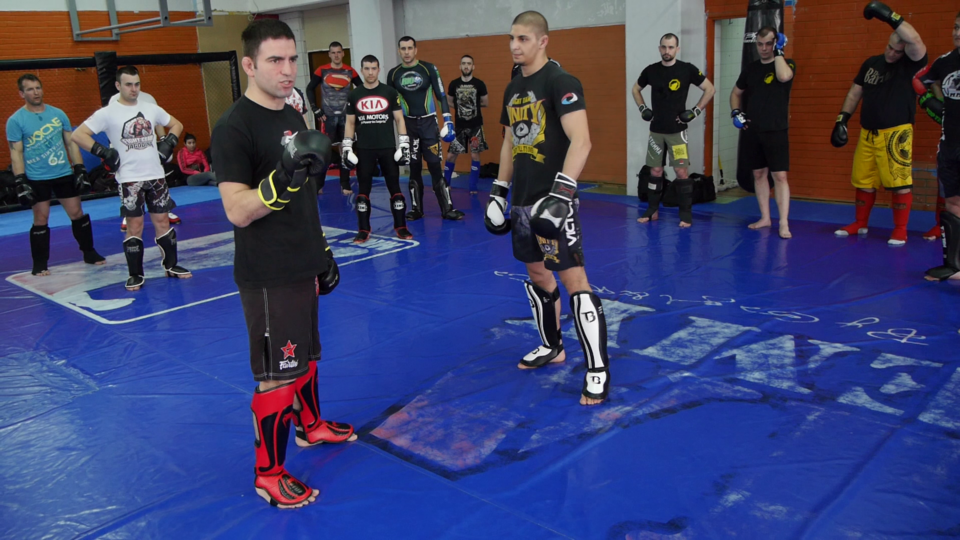
A single 90-minute clinic for coaches and serious practitioners.
Coach and Practitioner Clinic
This session focuses on the teaching side of the system — how to develop transitions in your athletes, which drills produce the fastest results in each segment, and how to continue building on the material after the workshop ends.
You and your coaches will leave with a structured approach to MMA transition training you can implement in regular classes immediately.
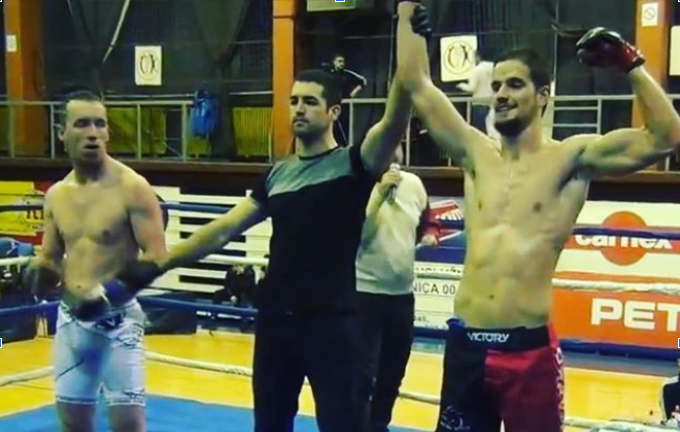
MARK HAS ELEVATED MY GAME TO ANOTHER LEVEL
I started my martial arts journey around 8 years ago at Mark's MMA Academy. What drew me in was the enormous MMA knowledge Mark possesses, and the seamless way he passes it on. Over the years, I have cross-trained with different coaches in various disciplines, but found Mark's system to be easiest to understand and implement. MMA is a complex sport, and requires an extremely skilled and experienced individual to teach it the right way, which Mark definitely is.
Working with Mark has elevated my game to another level, got me several amateur gold medals and amazing experiences. If you are looking to embark on the martial arts journey, get fit and strong, Mark is one of the best coaches to guide you.
MARKO DAVITKOV - Kaizen MMA Academy

KNOWLEDGEABLE AND TO THE POINT
I began competing rather late, at the age of 34. Rather than physical attributes, I always emphasized skill, tactics and an open mind always ready to learn and improve. In my first MMA team, I immediately established a great cooperation, that last even today, with coach Mark Lajhner, who was also a fighter at the time. In him I recognized an expert who was knowledgeable and to the point, precise and clear, something I was aiming for.
Mark has helped me to become one of the best Serbian MMA fighters, despite being a lot older than most competitors. He can help you too!
DRAGUTIN "BELI" MILOSEVIC - Home of MMA
ABOUT ME
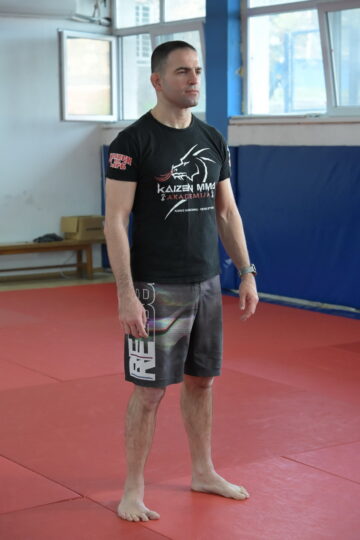
My name is Mark Lajhner. I have been in combat sports since 1990.
I represented Serbia in judo and have medals in BJJ, wrestling and judo competitions. I am undefeated in MMA. I trained under August Wallén — founder of the International MMA Federation, the governing body for amateur MMA in over 120 countries, and head instructor of Shooters MMA, one of the biggest MMA teams in Europe.
I have spent tens of thousands of dollars traveling internationally to train and pressure-test every segment of this game — training alongside UFC fighters, judo and wrestling Olympians, and world-class BJJ black belts.
I led instructor education for the Serbian MMA Federation. I founded Kaizen MMA Academy and run MMACoach.net, where I teach through seminars, personal online coaching, online instructionals and YouTube videos.
Everything in this workshop has been pressure-tested — in competition, in sparring, and in years of coaching. If a technique doesn't survive resistance or connect to the next position, it doesn't make the cut.
I do this because I believe serious MMA clubs deserve structured technical education — not just more techniques.

INCREDIBLE EDUCATOR
Mark Lajhner is one of those rare occurrences in the world of martial arts, where an elite level athlete manages to evolve into an exceptionally good coach. I have been working in athletic performance enhancement for quite a few years and my main focus is the development of the most effective teaching methods to accelerate learning in combat athletes, so it is quite hard for me to get impressed by an instructor's teaching skills. Still, when I visited Mark's Kaizen MMA Academy and had the opportunity to train there, I was mind-blown by how incredible an educator Mark is.
He explains techniques with just the right ratio of explanation to demonstration and breaks them down to partial skills, gradually progressing from easy to hard, simple to complex, known to unknown. The result is something I have rarely seen in my twenty five years of martial arts training: all the students seem to absorb the knowledge and get his point simultaneously!
If you want to build your MMA game on a solid basis that allows you to constantly improve, I'd say you can't do better than train with Mark in person, in the Kaizen MMA Academy or in one of his summer camps. If this is not an option, his instructional DVDs is the next best thing. You will be surprised by how good you can be in the MMA game - I guarantee that!
SPYRIDON KATSIGIANNIS - Dynamo Kettlebells
SUCH A WELL THOUGHT-OUT TRAINING
Mark is, in my opinion, definitely one of the best coaches in Serbia generally, not just in martial arts. I haven't gone to other clubs except Kaizen MMA, but I went to many kickboxing clubs in Belgrade, Kraljevo and Kragujevac - and I also visited several Boxing and Karate clubs in various cities in Serbia, but never have I met such a well thought-out training like I did in Mark's academy. At least not in Serbia.
What I really like is the methodology and logic of training, Mark's continuous development and improvement of his own coaching/didactic/pedagogical abilities, and indeed this is not often the case in our region. Many of the things I learned from Mark I apply to coaching in my academy in Basel, because his method of transferring knowledge and skills may be easily and successfully applied to other martial arts as well.
ALEKSANDAR AVRAM - Basel, Switzerland (Optima Sportsclub)
WHAT YOUR CLUB GETS
A Serious Technical Event for Your Practitioners, Athletes and Coaches
A structured two-day workshop with a clear system your people can understand, drill and continue developing. Not a collection of techniques with no thread between them — a connected framework from striking through to ground dominance.
A Reputation for Technical Excellence
The clubs that invest in structured technical education build a reputation for it. That reputation attracts serious practitioners — and keeps them.
Ready-Made Marketing Materials
You get a professionally designed poster template with your club's name, logo, date,location and ticket price already in place — ready to print and post on social media. No design work on your end.
One Free Month of Online Coaching — Included. ($100 value)
After the workshop, you get one month of direct access to me — send me questions, sparring and drilling videos for review, and get feedback on how the system develops in your club. Use it as much or as little as you want.
A Clear Workshop Fee - No Surprises
The workshop fee is the same for every club. Travel by car or air, accommodation and meals are agreed in advance, so you’ll know the full cost before you commit—with nothing hidden.
I was able to find in the seminar the things that were missing for me. Individually, all the clubs practice their own disciplines (arts), but the transition between them is the hardest to master. Mark is very thorough and has explained it in the best way possible.
ŽARKO DUKIĆ - DECISIVE STRIKE GYM
I'm a Physical Education teacher by profession. I graduated from the Faculty
of Sport and Physical Education. I also fight in MMA and my score is 2-0. I'm thrilled with everything I experienced at the seminar. A very positive experience, and I will use every chance to come back, train with the coach
and broaden my knowledge.
BORISLAV VUJANOVIĆ - KBV BRČKO
COMMON QUESTIONS
Don't we already cover transitions in our regular training?
Probably, to some extent — most clubs do. But there's a difference between mentioning a transition in passing during a striking or wrestling class, and dedicating real time to drilling the connection until it holds up under pressure. This workshop is built specifically around that second part.
Will this conflict with how we train?
No. The goal is not to replace your system. It is to add a focused transition module that fits inside your existing program. You stay in charge of how the material is used after I leave.
Is this too advanced for my members?
This workshop is not for complete beginners. To get the most out of it, your practitioners need at least a working foundation in striking, wrestling and grappling. Intermediate to advanced practitioners will get the most from it — both recreational and competitive.
How much does the workshop cost?
The workshop has a fixed fee for the complete two-day format. Travel is calculated separately and agreed in advance, while the host provides private accommodation and meals during the visit.
Contact me with your city and preferred dates, and I will send you the exact workshop fee and travel requirements before you make any commitment.